-
- CNC Panel SawCNC Router MachineAutomatic Edge Banding MachineSix Sided CNC Drilling Machine
- Application
![news]()
Industrial Applications of CNC Panel Saws in Large-Scale Wood Processing
Views: 0 Author: Site Editor Publish Time: 2025-06-23 Origin: Site
![facebook sharing button]()
![twitter sharing button]()
![line sharing button]()
![wechat sharing button]()
![linkedin sharing button]()
![pinterest sharing button]()
![whatsapp sharing button]()
![sharethis sharing button]()
In the evolving landscape of modern woodworking, automation has become more than a convenience—it's a necessity. As global demand for furniture, construction materials, and packaging increases, manufacturers are under pressure to produce more, faster, and with greater precision. Manual methods are no longer sufficient for meeting the high-volume demands of industrial-scale operations. This is where CNC (Computer Numerical Control) technology steps in to transform productivity, consistency, and cost-efficiency.
Among the most crucial innovations in this field is the CNC panel saw. These machines combine automation, high-speed cutting, and intelligent software control to deliver unmatched performance in large-scale wood processing environments. From furniture factories to door manufacturers and packaging production lines, CNC panel saws are redefining how wood materials are cut and prepared.
Overview of CNC Panel Saws
What Are CNC Panel Saws and How Do They Work?
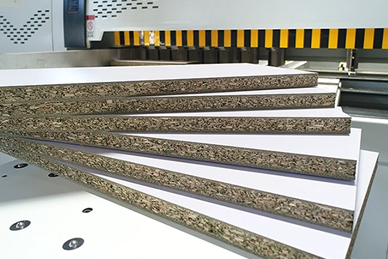
A CNC panel saw is a powerful, computer-controlled machine designed to cut large wood-based panels—such as MDF, plywood, chipboard, or laminated board—into smaller, precisely measured pieces. Unlike traditional table saws or manual panel saws, CNC panel saws automate the entire cutting process. Operators simply input cutting dimensions and layout patterns into the control software, and the machine handles the rest—measuring, aligning, cutting, and even pushing the finished panels out of the cutting area.
These machines typically consist of:
Main saw and scoring saw units for clean, tear-free cuts.
Heavy-duty working tables that provide stability during operation.
Servo-driven positioning systems for pinpoint accuracy.
Automatic feeding and pushing mechanisms to reduce labor input.
Programmable logic controllers (PLCs) and user-friendly HMI (Human Machine Interface) systems for easy operation.
Key Features That Make CNC Panel Saws Ideal for Industrial Use
In industrial settings, where thousands of panels are processed daily, CNC panel saws offer:
High-speed cutting with minimal error margins.
Automatic optimization of cutting paths, saving materials and time.
Consistent precision across long production runs.
Reduced labor costs by automating repetitive tasks.
Enhanced safety, with enclosed blades and limited manual handling.
Such features make CNC panel saws not just a productivity booster but a strategic investment for factories aiming to scale operations efficiently.
Applications in Furniture Manufacturing
Cutting Precision for Cabinets, Wardrobes, and Desks
In furniture manufacturing, every millimeter matters. Cabinet panels, wardrobe doors, and desk surfaces must be cut to exact specifications to ensure seamless assembly and uniform appearance. CNC panel saws provide the cutting accuracy needed for high-quality output, whether for flat-pack furniture systems or custom-designed pieces.
With their ability to execute pre-programmed cutting plans, these machines eliminate human error and reduce the need for post-processing. Whether you are working with melamine-faced chipboard, high-density MDF, or decorative laminates, CNC panel saws ensure clean edges, tight tolerances, and excellent repeatability.
Boosting Efficiency in Large-Scale Furniture Factories
For large-scale furniture production lines, speed is as important as precision. CNC panel saws allow for continuous cutting cycles with minimal downtime. Operators can load cutting jobs in batches, with automated feeding and unloading systems streamlining the entire process.
This enables furniture manufacturers to:
Produce more units in less time.
Reduce off-cuts and material waste.
Simplify training and reduce dependency on skilled labor.
Meet customer demands for faster delivery and consistent quality.
Applications in Cabinet and Door Panel Production
Handling Thick Boards with Accuracy
Producing wooden doors and heavy-duty cabinet panels often involves thicker and denser materials. Manual saws struggle to deliver the clean cuts and tight tolerances needed for these applications. CNC panel saws, especially industrial-grade models like those from Foshan Pallas, are engineered to handle these demanding materials effortlessly.
Equipped with powerful motors and reinforced saw carriages, these machines cut through thick boards with precision and speed, minimizing edge chipping and warping.
Supporting Standardized Mass Production
In cabinet and door production, consistency is key. CNC panel saws excel in high-volume, standardized output—cutting hundreds of identical panels per shift without deviation. Thanks to digital input and software-controlled parameters, once a job is programmed, it can be replicated at any time with the same high-quality results.

Applications in Wood Packaging and Pallet Industry
Cutting Panels for Crates and Pallets
The packaging industry often requires cutting large volumes of standard-sized wooden panels for use in crates, boxes, and pallets. While precision is important, speed and cost-effectiveness are critical in this sector.
CNC panel saws meet these demands by:
Cutting multiple panels simultaneously (stack cutting).
Automating size adjustments for different packaging needs.
Ensuring edge quality for safer handling during shipping.
Speed and Repeatability for Packaging Lines
Pallet and crate manufacturers often run continuous production shifts. CNC panel saws keep up with this pace thanks to their robust construction and automated workflows. With minimal operator intervention, packaging producers can dramatically improve output while reducing material loss.
Support for Custom and Decorative Paneling
Use in Architectural Panels, Wall Cladding, and Flooring
CNC panel saws are also widely used in the production of architectural panels, decorative wall claddings, and even flooring underlays. These products demand not just dimensional accuracy, but also aesthetic consistency—especially when surface patterns or veneers are involved.
CNC cutting ensures that grain directions align perfectly, miters are clean, and installation is seamless. In high-end interior projects, these details make all the difference.
Flexibility for Diverse Materials and Designs
One of the greatest strengths of CNC panel saws is their flexibility. From ultra-thin panels to thick industrial boards, from basic chipboard to coated surfaces, these machines adapt easily to a variety of materials and design requirements. Software-based control means switching between jobs takes minutes, not hours—making them ideal for custom orders or multi-product factories.
Why Choose Pallas CNC Panel Saws for Industrial Use
Foshan Pallas CNC Equipment Manufacturing Co., Ltd. has built a strong reputation for delivering high-performance CNC panel saws tailored to the needs of industrial manufacturers. Here’s why Pallas machines are a smart investment:
Strong Frame and Industrial Durability
Pallas machines are built with reinforced steel frames that ensure stability during high-speed operation. The robust construction reduces vibration, enhances accuracy, and ensures longevity even under 24/7 operation.
Automatic Pushing System for Continuous Workflow
Time is money in industrial production. Pallas CNC panel saws feature automated pushing systems that quickly move cut panels out of the cutting zone and position new material—keeping productivity high and downtime low.
Smart Control Interface for User-Friendly Operation
Each machine is equipped with an intuitive touch-screen interface powered by advanced software. Operators can easily load cut plans, monitor performance, and adjust parameters—all with minimal training required.
Tailored for High-Volume Applications
Whether you’re processing 50 or 5,000 panels a day, Pallas machines deliver consistent performance. Their scalability, cutting speed, and energy efficiency make them a valuable asset for any industrial woodworking facility.
Conclusion
In the world of large-scale wood processing, the ability to cut panels accurately, efficiently, and reliably is no longer optional—it’s essential. CNC panel saws provide the perfect balance of automation, precision, and adaptability for modern factories that need to scale operations while maintaining high quality.
From furniture to doors, packaging to decorative panels, the industrial applications of CNC panel saws are both wide-ranging and indispensable. Among the many brands available, Pallas CNC panel saws stand out for their performance, durability, and ease of use—making them a top choice for manufacturers who want to stay competitive in a fast-moving market.
Ready to take your production to the next level? Contact Foshan Pallas CNC Equipment Manufacturing Co., Ltd. today or visit www.kihonmachine.com to explore a full range of cutting-edge woodworking solutions.

![English]()
![zhifufuben]()