-
- CNC Panel SawCNC Router MachineAutomatic Edge Banding MachineSix Sided CNC Drilling Machine
- Application
![news]()
What Is a Six-Sided CNC Drilling Machine and How Does It Work?
Views: 0 Author: Site Editor Publish Time: 2025-06-12 Origin: Site
![facebook sharing button]()
![twitter sharing button]()
![line sharing button]()
![wechat sharing button]()
![linkedin sharing button]()
![pinterest sharing button]()
![whatsapp sharing button]()
![sharethis sharing button]()
The landscape of the woodworking and furniture industry has transformed dramatically over the past decade, driven by fierce competition, evolving customer demands, and rapid technological advances. Central to this transformation is CNC automation, which enables unprecedented precision, speed, and process integration in panel-based furniture manufacturing. Where once each side of a cabinet or series of panels required manual flipping, measuring, drilling, and handling, machines now carry out these processes with minimal human intervention. This evolution is ushering in a new era of intelligent manufacturing, with six-sided CNC drilling machines taking centerstage.
A six-sided CNC drilling machine—capable of performing machining operations on all six faces of a panel in a single setup—is no longer just a convenience for large-scale manufacturers; it’s become a necessity. These machines enable consistent quality, reduced labor costs, and higher throughput—all with the click of a button.
Definition and Basic Concept
What Does “Six-Sided Drilling” Mean?
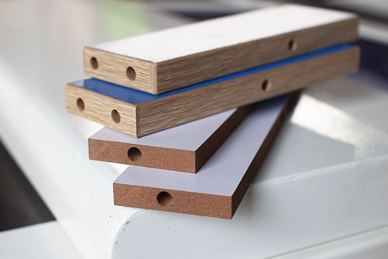
In woodworking, six-sided drilling refers to drilling, boring, countersinking, or inserting fasteners into all six sides of a board—top, bottom, left, right, front edge, and rear edge—without the need to manually flip or reposition the panel multiple times. The panel remains fixed on the machine table, and the multiple drilling heads reach each surface via coordinated motion around and through the board.
How Is This Different from Traditional Methods?
Traditionally, drilling panels involved multiple manual operations:
Flip the panel to drill the back
Reposition it for side or edge drilling
Reset measurements each time
This workflow was labor-intensive, error-prone, and limited in scalability. Even standard CNC machines typically handle drilling one surface at a time (often requiring several passes)—a method known as point-to-point drilling.
In contrast, a six-sided CNC machine consolidates all these operations into one automated sequence. It uses multiple drilling heads mounted above, below, and beside the panel, with sidelong drilling arms that pivot into position. The panel never moves—only the drilling heads do—so accuracy is consistent and production is continuous.
Key Components of a Six-Sided CNC Drilling Machine
A six-sided CNC drilling machine’s ability to handle all faces of a panel relies on a combination of high-precision mechanical assemblies and smart control systems. Here’s how they come together:
1. Upper and Lower Drilling Heads
These motorized heads are mounted above and below the panel on vertical (Z) axes. They handle drilling, pocket boring, dowel insertion, and potentially countersinking. Each can be equipped with multiple spindles to perform numerous holes in a single traverse.
2. Left/Right Side Boring Units
Integrated into the left and right frameworks are moving side arms that swing or slide horizontally into position. These arms access the panel’s edges for drilling hinge holes, shelf pin holes, and other edge-specific machining. They often include servo-driven axes to adjust for various panel widths and to accommodate complex drilling layouts.
3. X/Y/Z Axis Servo Systems and Automatic Clamps
Precision motion across the X, Y, and Z axes is governed by high-torque servo motors and ball screw or rack-and-pinion drives. Clamps on the table hold panels securely and flat for machining. Some advanced systems also include pneumatic or vacuum-type clamps that engage automatically once the panel is positioned.
4. Integrated Control System (Nesting & Barcode)
A six-sided CNC drilling machine typically comes with an industrial-grade CNC controller, often supplemented by nesting software and/or barcode recognition systems:
Nesting arranges drilling positions based on CAD/CAM designs or production files.
Barcode scanning reads labels affixed to panels, triggering a preset drilling program without manual input.
This integration ensures quick setup and accurate execution, even for large batch runs or on-demand production.

Step-by-Step Working Process
Here’s how a six-sided CNC drilling machine from Pallas might operate in a typical manufacturing cycle:
1. Automatic Loading of Panels
The process begins with raw panels being loaded—either manually, via conveyor, or through an automated feeding system. Panel sizes and thicknesses are input manually or read via barcodes.
2. Optical Positioning / Barcode Recognition
Once on the table, the machine uses sensors or cameras to check panel alignment. If barcoded, a scanner reads the code and selects the corresponding drilling pattern.
3. Clamping & Setup
Automatic clamps engage from multiple directions (above, below, edges), locking the panel firmly in place.
4. Six-Face Drilling
Top and bottom heads descend vertically to drill holes per the program.
Side boring arms swing in to drill edges and grooves.
The sequence is fully automated, with each head activating sequentially or simultaneously as required.
5. Unloading & Sorting
After machining, clamps release and the system uses conveyors or pushers to move the panel to unloading stations. Finished parts are grouped and labeled if needed.
6. Software Integration
Throughout this process, CAD/CAM software manages drilling templates and nesting lists. Data flows to ERP or MES systems to track production progress, link parts to orders, or allocate inventory—all with minimal human oversight.
Benefits in Industrial Application
Six-sided CNC drilling machines deliver powerful advantages for manufacturing at scale:
1. Full Drilling in One Pass
Machining all six faces in one setup eliminates multiple handling steps and reduces error accumulation. Tolerance stack-up—human repositioning from side-to-side—is completely avoided.
2. Time Savings and Labor Reduction
Consolidating multiple drill routines into a single continuous process dramatically reduces cycle time and operator intervention. In many facilities, one operator can supervise multiple machines, reducing labor cost per part.
3. Enhanced Consistency and Quality
Six-sided drilling machines rely on repeatable servo-controlled precision. Punch alignment, drilling accuracy, and hole depth are consistent across parts—even in long production runs.
4. Scalability and Flexibility
Modular configurations—such as Pallas’ KN-612B, KN-612DZ, or KN-2312 series—cater to different panel sizes, thicknesses, and product types. Facilities can scale by operating multiple machines with the same software, ensuring easy expansion.
5. Continuous Production and Workflow Integration
Barcode reading and nesting software allow for seamless workflows. Panels flow from feeding conveyors through processing and onto packaging without manual intervention—a prerequisite for high-efficiency Industry 4.0 setups.
Real-World Use Cases
- Cabinetry and Wardrobe Manufacturing
Install hinge and shelf pin holes, fastener bores, and grooves in one pass—achieving precision fit and repeatability at scale.
- Modular Office Furniture
Series of panels needing identical layouts can be batch-processed accurately, enhancing lead times and sharp differentiation.
- Component Warehousing
Trigger drilling automatically off workflow orders, even in small-lot or custom furniture runs, eliminating changeover delays.
Why Foshan Pallas Six-Sided CNC Drill Machines?
Pallas models like the KN-612B, KN-612DZ, and KN-2312 series offer:
High-speed, multi-axis precision
Automatic barcode and nesting system compatibility
Robust frame structures and reliable servo drives
Intuitive PLC + touchscreen interface
Optional side boring extensions and tool magazine add-ons
Scalable software to manage multiple machines
These machines exemplify the hallmarks of intelligent panel production: speed, precision, automation, and flexibility.
Conclusion
The six-sided CNC drilling machine represents the future of panel-based furniture manufacturing—offering exceptional efficiency, precision, and workflow automation. With the ability to drill all six faces of a panel in a single setup, Pallas machines optimize production for cabinetry, wardrobes, and custom furniture components.
For manufacturers seeking to stay ahead in the era of smart manufacturing, investing in a six-sided CNC solution is a strategic move. Foshan Pallas CNC Equipment Manufacturing Co., Ltd. offers industry-leading machines built for durability, speed, and seamless software integration.
To learn more about how Pallas can upgrade your production line, visit www.kihonmachine.com or contact their team for personalized solutions.

![English]()
![zhifufuben]()