-
- CNC Panel SawCNC Router MachineAutomatic Edge Banding MachineSix Sided CNC Drilling Machine
- Application
![news]()
What Is a Six-Sided CNC Drilling Machine Used For
Views: 0 Author: Site Editor Publish Time: 2026-06-28 Origin: Site
![facebook sharing button]()
![twitter sharing button]()
![line sharing button]()
![wechat sharing button]()
![linkedin sharing button]()
![pinterest sharing button]()
![whatsapp sharing button]()
![sharethis sharing button]()
The primary bottleneck in modern panel furniture manufacturing is the cycle time lost and precision errors introduced by manually repositioning workpieces for multi-face machining. When operators must flip and align panels multiple times, production slows down, and the risk of scrap increases. Scaling custom furniture production presents a significant challenge where traditional point-to-point machines or standard side-hole drills require multiple setups, increasing labor costs and floor space requirements.
To overcome these inefficiencies, facilities are adopting the Six-Sided CNC Drilling Machine. This consolidated solution is designed to execute top, bottom, and all four lateral operations in a single cycle. By shifting the production focus from manual handling to automated throughput, manufacturers can drastically improve output and maintain strict quality control.
Single-Cycle Machining: Six-sided CNC drilling machines eliminate manual repositioning, processing all six panel faces (drilling, routing, slotting) in one continuous operation.
Optimized for Panel Furniture: The primary application is high-volume, high-mix custom furniture manufacturing, specifically drilling cabinet panels and executing complex joinery.
Labor and Footprint Efficiency: Replaces the need for sequential machine setups (e.g., a nesting CNC followed by a separate side-hole drill), reducing both operator headcount and factory floor footprint.
Software-Driven Automation: Maximum ROI depends on seamless CAM/CAD integration, allowing for barcode-driven, scan-and-process workflows that remove operator programming errors.
The Mechanics of Six Side Processing
The operational workflow of a six-sided machine relies on advanced mechanical sequences. Dual drill banks located on the top and bottom, combined with lateral spindles, operate simultaneously or sequentially without releasing the workpiece. This continuous control ensures the panel remains perfectly referenced throughout the entire cycle. You load the part once, and the machine takes over. The upper and lower drill blocks move independently along the X and Y axes. This allows the machine to bore hinge cup holes on the bottom face while simultaneously drilling shelf pin holes on the top face. The synchronization of these movements requires robust servo motors and rigid frame construction to prevent vibration.
The exact physical processing capabilities in a single cycle define complete six side processing. Face machining involves simultaneous top and bottom surface processing. Edge machining covers the left, right, front, and back lateral surfaces. This comprehensive execution handles all required operations without interruption. When you run a complex wardrobe side panel, the machine handles the cam-lock holes on the face, the dowel holes on the edges, and the grooving for the back panel all in one pass. The lateral spindles engage the edges with precision, ensuring that mating parts align perfectly during final assembly.
Automated gripper systems and air-floatation tables secure the panel during transit. These systems ensure zero-marring on delicate surfaces and maintain exact dimensional accuracy during high-speed movements. The precision of the clamping mechanism directly impacts the final quality of the joinery. Pneumatic clamps grab the panel by the edges, pulling it through the machining zone. The air-floatation tables reduce friction, preventing scratches on high-gloss melamine or veneer finishes. If the grippers lose their hold, the part shifts, and the entire hole pattern is ruined. Therefore, maintaining optimal air pressure and clean gripper pads is a daily requirement on the shop floor.
Eliminating secondary handling yields quantifiable time savings. Removing the manual flipping and re-referencing required in traditional 3-axis or 4-axis setups drastically cuts down the cycle time per part. Operators spend less time handling materials and more time managing the overall production flow. Every time a human touches a part, you introduce the potential for error. An operator might load a panel backward or upside down on a traditional point-to-point machine. By processing all six sides in one clamping, you remove the human element from the referencing equation. This guarantees that the distance from the front edge to the first shelf pin hole is identical on every single part.
![Six-Sided CNC Drilling Machine in operation]()
Primary Applications: What Is a Six-Sided CNC Drilling Machine Used For?
In high-volume panel furniture production, the machine plays a critical role in processing standardized and custom cabinet boxes, wardrobes, and modular shelving. The efficiency of drilling cabinet panels for cam-lock fasteners, dowels, and hinge plates in a single pass is unmatched. This capability is essential for fast-paced modular furniture assembly. When you are pushing out hundreds of frameless cabinets a day, the bottleneck is always the machining of the side panels. These panels require extensive drilling on the faces for hardware and on the edges for assembly. The six-sided machine chews through these parts, spitting out finished panels ready for the hardware insertion station.
For complex custom furniture hole drilling, the application extends to bespoke architectural millwork and custom office furniture requiring non-standard hole patterns on multiple axes. The machine handles varying panel thicknesses and dimensions dynamically via barcode scanning, making it ideal for batch size one production environments. You can run a 19mm thick desk top immediately followed by a 16mm drawer box side. The barcode tells the machine exactly what program to load, adjusting the Z-axis depth automatically. This flexibility allows custom shops to compete with mass-production facilities by eliminating setup times between different jobs.
These machines are not just for holes. Integrated slotting, routing, and grooving capabilities allow for cutting back-panel grooves, routing custom profiles, and executing Lamello or hidden fastener slotting on the top, bottom, and lateral edges. This versatility consolidates several machining steps into one platform. Many modern cabinet designs utilize hidden fasteners like the Lamello Clamex system, which requires precise T-slots on the faces and edges. A properly equipped six-sided machine can execute these slots alongside standard drilling operations. You can also use the routing spindles to cut out electrical chases in office furniture or create custom shaped cutouts in interior doors.
Application Type
Machining Operations Performed
Typical Material Used
Frameless Kitchen Cabinets
Hinge cup boring, shelf pin drilling, dowel edge drilling, back panel grooving
18mm Melamine, Plywood
Custom Office Desks
Wire management routing, cam-lock drilling, Lamello slotting
25mm MDF, Particleboard
Modular Wardrobes
Continuous shelf pin holes, structural dowel boring, drawer slide pilot holes
16mm Particleboard
Architectural Millwork
Custom profile routing, hidden fastener slotting, angled drilling
Veneered MDF, Solid Core
The Role of Six-Side Processing in the Modern Woodworking Production Line
The workflow positioning of the machine fits perfectly within an automated, high-efficiency furniture production line. First, a nesting CNC router or computer panel saw cuts the sheet goods to size. Next, an edge banding machine finishes the panel edges. Then, the automatic six-sided machine processes all joinery, routing, and drilling. Finally, clean panels move directly to hardware insertion and final packing. This sequence ensures that the delicate edge banding is applied before the panel is subjected to heavy machining. If you drill the edge dowel holes before edge banding, the glue from the bander will fill the holes, ruining the part. The six-sided machine sits right at the end of the machining line, acting as the final quality control checkpoint before assembly.
Through-feed advantages make these machines highly adaptable. The through-feed design allows seamless integration with automated loading and unloading tables, robotic arms, and return conveyor systems. This continuous flow prevents bottlenecks and maximizes the utilization of the entire production line. In a fully automated cell, a robotic arm picks the sized and banded panel from a stack, scans the barcode, and feeds it into the machine. Once the machining is complete, the panel exits the rear of the machine onto a motorized conveyor. This conveyor can either transport the part to the next station or return it to the operator at the front of the machine. This setup allows a single operator to manage the entire drilling process, drastically reducing labor requirements.
Sheet goods are loaded onto the nesting CNC or panel saw for sizing.
Sized parts are transported to the edge banding station for edge treatment.
Banded parts are fed into the six-sided machine for all drilling and routing.
Finished parts are inspected and moved to the hardware insertion area.
Completed panels are packaged for shipping or sent to the assembly clamps.
Six-Sided CNC Drilling Machine vs. Traditional CNC Boring Machines
When comparing traditional side hole drilling machines against the unified six-sided approach, the differences are stark. The traditional two-step workflow requires a nesting router for face operations and a separate side hole machine for edge operations. The unified approach reduces work-in-progress inventory staging and streamlines the factory floor. With the traditional method, you have stacks of partially machined parts sitting between the nesting router and the side hole drill. These stacks take up valuable floor space and increase the risk of parts getting damaged or lost. The six-sided machine eliminates this intermediate staging area. Parts go in blank and come out completely machined, ready for assembly.
Evaluating throughput differences against a traditional cnc boring machine reveals significant advantages. Traditional point-to-point centers often require pod-and-rail setup times. In contrast, six-sided through-feed machines offer continuous panel feeding without manual pod setups, greatly accelerating production rates. Setting up the vacuum pods on a P2P machine for a custom part can take five to ten minutes. If you are running a batch size of one, that setup time kills your productivity. The through-feed design of the six-sided machine uses dynamic grippers that adjust automatically based on the barcode data. There is zero setup time between different part sizes.
Cycle time and throughput analysis demonstrate clear reductions. Comparing the total time to process a standard 18mm cabinet side panel using traditional methods versus a six-sided machine shows that eliminating manual handling and setup times drastically lowers the overall cycle duration. A standard side panel might take three minutes on a P2P machine, including loading, pod setup, machining, and unloading. That same panel can be processed in under sixty seconds on a six-sided machine. When you multiply that time savings across hundreds of panels per shift, the increase in daily output is massive. You are effectively tripling the capacity of your drilling department without adding extra shifts or machines.
Feature
Six-Sided CNC Drilling Machine
Traditional Point-to-Point CNC
Setup Time
Zero (Automated via barcode)
High (Manual pod and rail adjustment)
Part Handling
Single clamping for all six sides
Requires manual flipping for opposite face
Throughput
High (Continuous through-feed)
Medium (Batch processing limited)
Floor Space
Compact linear footprint
Large footprint required for safety zones
Operator Skill
Low (Scan and feed)
High (Requires manual programming and setup)
Technical Evaluation Criteria for Production Managers
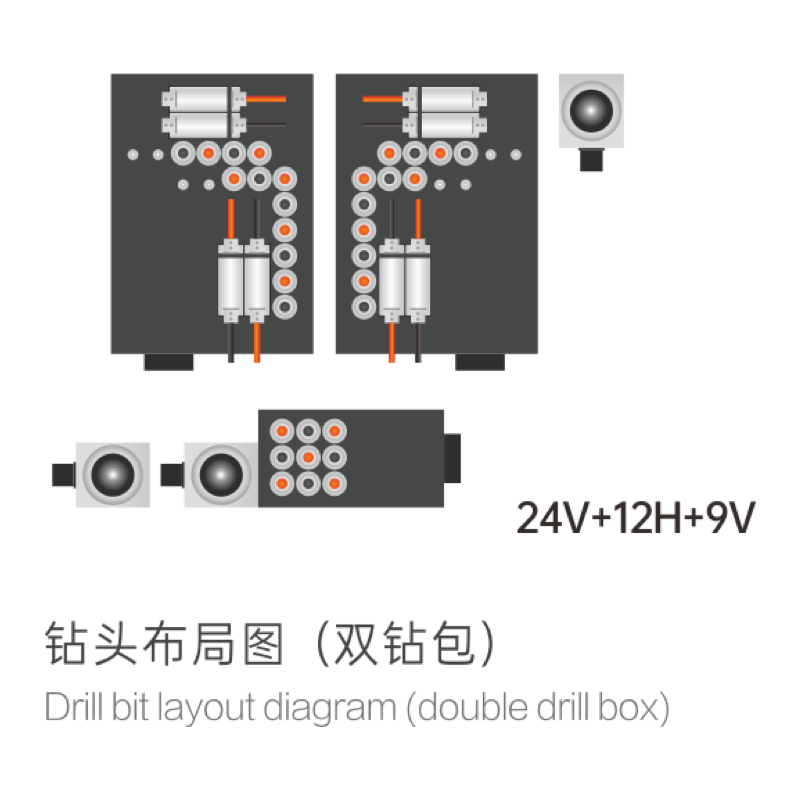
Evaluating spindle configurations and drill bank capacity is crucial. Production managers must consider the number of vertical and horizontal drill bits required for their specific product mix. Independent versus synchronous spindle operation dictates how efficiently the machine handles complex, multi-hole patterns. A standard configuration might include 12 vertical spindles on the top block, 8 vertical spindles on the bottom block, and 4 horizontal spindles for the edges. If your product line relies heavily on 32mm system holes, you need a drill block with spindles spaced exactly at 32mm centers to allow for gang drilling. The ability to drop multiple bits simultaneously cuts the drilling time in half compared to a single spindle pecking out each hole individually.
Software integration and data flow determine the true efficiency of the machine. CAM software compatibility with platforms like Cabinet Vision, Microvellum, or Mozaik is essential. Barcode generation and scanning capabilities are necessary for executing true batch size one manufacturing without manual data entry errors. The machine is just a heavy piece of iron without the right software driving it. The post-processor must translate the CAD drawings into precise G-code that the machine controller understands. If the post-processor is flawed, the machine will drill holes in the wrong locations or crash the spindles into the grippers. You must verify that the machine manufacturer has a proven track record of integrating with your specific software package.
Material handling and automation readiness must align with the facility's goals. Feed systems range from manual loading to integration with robotic arms, return conveyors, and automated storage and retrieval systems. Selecting the right handling configuration maximizes the machine's throughput potential. If you plan to run the machine with a single operator, a return conveyor is mandatory. The operator stands at the front, scans the part, feeds it in, and waits for the finished part to return via the conveyor. If you are building a fully automated lights-out facility, you need a machine with an open software architecture that can communicate with your central ERP system and robotic handling cells.
ROI and Overall Value Influencing Factors
Analyzing labor cost reduction versus initial capital expenditure is a primary financial consideration. The high upfront cost of a six-sided machine is offset by the reduction of skilled machine operators required on the floor. Automated processing lowers the dependency on manual labor and reduces associated overhead. Finding reliable, skilled CNC operators is a constant struggle for woodworking shops. By automating the drilling process, you can move your skilled workers to more critical areas like custom assembly or quality control. The machine can be operated by entry-level personnel whose only responsibility is scanning barcodes and feeding panels.
Floor space optimization provides tangible value. Consolidating two or three traditional machines into one compact, through-feed footprint saves valuable square footage. This space can be repurposed for assembly, staging, or additional production lines. Factory floor space is expensive. If you can replace a nesting router, a side hole drill, and the staging carts between them with a single linear machine, you free up hundreds of square feet. This allows you to increase your overall production capacity without having to move to a larger facility or build an extension.
Error reduction and material yield directly impact profitability. Eliminating manual part flipping reduces scrap rates caused by operator orientation errors or misaligned reference edges. Consistent, automated processing ensures high material yield and lowers waste costs. When an operator drills a hole in the wrong spot on a veneered panel, you don't just lose the material cost. You lose the time spent cutting and edge banding that part, and you disrupt the assembly schedule while a replacement part is manufactured. The six-sided machine eliminates these orientation errors, ensuring that every part comes out exactly as designed.
Implementation Risks and Mitigation Strategies
Software ecosystem bottlenecks present a significant risk. The machine is only as fast as the data fed to it, and poorly configured post-processors will stall production. To mitigate this, mandate a proven post-processor and conduct thorough software integration testing prior to machine delivery. Do not accept delivery of the machine until the vendor has successfully run your specific part files on their floor. Send them a complex job file from your CAM software and demand a video of the machine executing the code flawlessly. This upfront testing prevents weeks of downtime and frustration during the installation phase.
Operator training and skill requirements shift dramatically. Transitioning from manual machines to highly automated CNC systems requires a shift from mechanical troubleshooting to software management. Invest in vendor-led training focused on CAM software, barcode systems, and preventative maintenance of pneumatic grippers. Your operators need to understand how to read the error codes on the machine controller and how to clear faults safely. They also need to know how to calibrate the tool lengths after changing a dull drill bit. Without proper training, a minor sensor fault can shut down your entire production line for hours while you wait for a service technician to call you back.
Maintenance and downtime realities must be managed. A single-machine bottleneck means that if the six-sided drill goes down, the entire assembly line halts. Establish strict preventative maintenance schedules for drill banks, ensure local availability of spare parts, and maintain a service SLA with the manufacturer. You need to keep spare sensors, gripper pads, and drill bits in stock at all times. The drill blocks require regular lubrication, and the air filters must be drained daily to prevent moisture from damaging the pneumatic valves. A rigorous maintenance schedule is the only way to ensure maximum uptime and protect your investment.
Conclusion
Request a time-study from manufacturers using your specific CAD files to verify claimed cycle times before requesting a formal quote.
Audit your current floor space and workflow to determine if a linear through-feed machine or a return conveyor setup best fits your facility.
Verify post-processor compatibility with your existing CAM software directly with the software developer, not just the machine salesperson.
Develop a strict preventative maintenance schedule focusing on pneumatic systems and drill block lubrication prior to machine installation.
FAQ
Q: What is the difference between a nesting CNC and a six-sided CNC drilling machine?
A: Nesting CNCs primarily cut shapes and drill the top face from full sheets of material. Six-sided machines process pre-sized panels on all six faces simultaneously, focusing on joinery and edge operations without manual repositioning.
Q: Can a six-sided CNC drilling machine process solid wood?
A: While it is mechanically possible, these machines are optimized for engineered panels like MDF, particleboard, and plywood used in high-volume furniture production. Solid wood may require different tooling and feed rates.
Q: How does six side processing improve custom furniture manufacturing?
A: It allows for seamless batch size one production. By utilizing barcode scanning, the machine automatically adjusts to different panel sizes and hole patterns without requiring manual resetting by the operator.
Q: What software is required to run a 6-sided CNC drill?
A: Standard requirements include CAD/CAM design software to generate the parts, a compatible post-processor to translate the design into machine code, and the machine-level control software to execute the operations.
Q: Does a six-sided drilling machine require a return conveyor?
A: While not strictly required, a return conveyor allows for single-operator use. It brings the finished panel back to the loading station, maximizing labor efficiency and streamlining the workflow.
Q: How long does it take to process a standard cabinet panel?
A: Processing times typically range from a few seconds to a couple of minutes per panel. The exact duration depends heavily on the complexity of the routing, slotting, and drilling operations required.

![English]()
![zhifufuben]()