-
- CNC Panel SawCNC Router MachineAutomatic Edge Banding MachineSix Sided CNC Drilling Machine
- Application
![news]()
What Is an Automatic Edge Banding Machine and How It Works
Views: 0 Author: Site Editor Publish Time: 2026-06-14 Origin: Site
![facebook sharing button]()
![twitter sharing button]()
![line sharing button]()
![wechat sharing button]()
![linkedin sharing button]()
![pinterest sharing button]()
![whatsapp sharing button]()
![sharethis sharing button]()
Scaling panel furniture manufacturing inevitably exposes the primary bottleneck in shop throughput: edge finishing. When production demands increase, relying on manual application and semi-automatic methods introduces inconsistent adhesion, high labor costs, and unacceptable defect rates. These inefficiencies quickly erode profit margins on high-volume runs, leaving shop managers scrambling to maintain quality control. Transitioning to a fully automated solution requires understanding the precise mechanical sequence of the equipment and how it integrates into your existing workflow. You need to know exactly what happens at each station along the track. This guide breaks down how these machines operate, the technical trade-offs between different configurations, and the strict criteria for evaluating an equipment upgrade for your facility. By mastering these mechanical principles, you can eliminate bottlenecks and achieve flawless panel processing.
Process Automation: Fully automatic machines consolidate pre-milling, gluing, pressing, trimming, scraping, and buffing into a single, continuous pass, drastically reducing cycle times.
Adhesive & Material Variables: The choice between EVA, PUR, and modern zero-joint (hot-air/laser) adhesive systems directly dictates the machine's complexity, maintenance requirements, and the durability of the finished panel furniture edge.
Scalability: Integrating an automatic edgebander into a cabinet production line requires specific facility prerequisites, including robust dust extraction, stable pneumatic pressure, and adequate floor space.
ROI Drivers: Upfront capital expenditure is offset by reductions in manual rework, lower consumable waste, and the ability to process high-demand materials like PVC edge banding at scale.
What Defines a Fully Automatic Edge Banding Machine?
Core Functionality and Scope
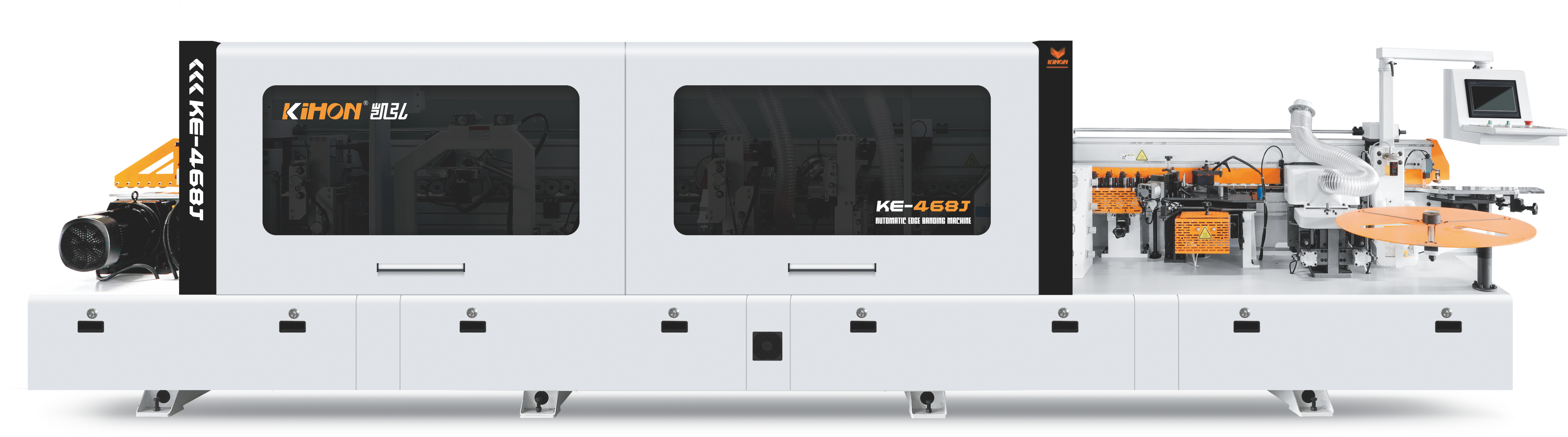
A fully automatic Edge Banding Machine is a stationary, multi-station industrial unit engineered to automatically apply, bond, and finish edge materials to straight-edged substrate panels. This equipment runs continuous feeds without operator intervention between the individual processing steps. You feed the raw board into the in-feed track, and a completely finished, ready-to-assemble product exits the out-feed track seconds later. The internal mechanics handle everything from surface preparation to final polishing.
Contrast this heavy-duty equipment with a manual or semi-automatic edge sealing machine. Manual portable units require hand feeding, inconsistent pressure application, and entirely separate trimming steps that slow down production. Semi-automatic models often lack integrated pre-milling or corner rounding stations, forcing operators to move panels between different machines to achieve a finished look. Fully automatic machines handle the entire sequence in one continuous pass, locking in quality control and predictable cycle times.
The Role in Modern Panel Furniture Production
Raw substrate edges must be sealed to ensure product longevity. Materials like MDF, particleboard, plywood, solid wood panels, and polymer door panels are highly vulnerable to moisture ingress and physical impact. Sealing these edges ensures structural integrity and provides aesthetic continuity across the finished piece. A properly applied edge protects the porous core material from swelling, delamination, and eventual failure in demanding environments like kitchens and bathrooms.
Modern shops have shifted entirely away from labor-intensive manual operations. Continuous-feed automation is now the baseline standard for any competitive facility. This shift allows facilities to maintain high output volumes while achieving consistent, flawless edges on every single panel. When you eliminate the human variable from the pressure and trimming stages, you drastically reduce the number of rejected parts and rework hours.
Operational Mechanics: How the Machine Works Step-by-Step
Station 1: Pre-Milling and Panel Preparation
The process begins at the pre-milling station, which is arguably the most critical step for ensuring a tight glue line. Counter-rotating diamond cutter heads square the panel edge as it enters the machine. They remove saw marks, tear-out from dull blades, and minor swelling caused by ambient humidity. This step creates a perfectly flat, freshly exposed surface for the adhesive to grip.
Pre-milling reduces the need for perfectly scored cuts on the primary panel saw. It acts as a quality control safety net before adhesive application. A clean, perfectly perpendicular edge guarantees a tight, invisible glue line. If the panel is even slightly angled or rough, the pressure rollers cannot force the tape flush, resulting in a visible gap or weak bond.
Station 2: Adhesive Application, Heating, and Zero-Joint Alternatives
Traditional machines utilize a complex glue pot mechanism. The system heats the adhesive to a precise temperature, maintains that heat, and applies it via a synchronized glue roller directly to the panel edge. Some specialized configurations apply the glue to the banding strip instead, though direct-to-panel is more common for standard hot-melt systems.
Traditional hot-melt adhesives include EVA and PUR. EVA is common, cost-effective, and easy to work with, but it can reactivate under high heat. PUR offers superior heat and water resistance, creating a cross-linked chemical bond, but it requires strict maintenance and purging protocols to prevent the glue from curing inside the pot. Zero-joint technology uses hot-air or laser fusion. These systems melt a pre-applied adhesive layer on the tape itself. This eliminates the glue pot entirely, removes the maintenance burden of cleaning cured glue, and creates a completely invisible joint.
Station 3: Tape Feeding and the Pressure Zone
The machine synchronizes the feeding of coiled materials to match the exact speed of the track. This includes PVC edge banding, ABS, wood veneer, or solid wood strips. A heavy-duty pneumatic guillotine snips the tape from the coil, leaving just enough overhang on the leading and trailing edges for the trimming stations to process.
The pressure zone follows immediately after the tape meets the glued panel. It features one large, driven roller followed by a series of smaller, tapered idle rollers. This sequence forces out trapped air bubbles and ensures tight, uniform contact across the entire thickness of the board. It establishes a microscopic glue line for maximum bond strength, pressing the tape firmly into the substrate before the adhesive begins to cool and set.
Station 4: End Trimming (Snipping)
The end trimming station utilizes a precision dual-saw mechanism mounted on linear guides. These high-speed saws travel briefly with the panel as it moves down the track. They cut the leading and trailing overhang of the edge tape perfectly flush with the panel ends. This requires precise pneumatic timing and highly calibrated sensors to avoid clipping or damaging the actual panel corners during the cut.
Station 5: Top and Bottom Fine Trimming
Next, the panel moves through the high-frequency routing station. Precision cutters remove the top and bottom overhang of the tape. They apply a specific radius, bevel, or flush cut to match the exact thickness of the tape being applied. This step shapes the edge to its final profile, removing the sharp corners and blending the tape seamlessly into the top and bottom faces of the board.
Station 6: Scraping (Profile and Glue)
Profile scraping removes the microscopic chatter marks left behind by the high-speed trimming routers. It ensures a perfectly smooth radius on plastic tapes, eliminating the need for manual sanding. Flat scraping, often called glue scraping, utilizes flat carbide blades to remove any adhesive squeeze-out from the top and bottom surfaces of the panel. This keeps the board faces completely clean and ready for immediate packaging or further machining.
Station 7: Buffing and Cleaning
The final step involves large cloth buffing wheels. They polish the machined edge and restore color to stressed plastics that may have whitened during the trimming and scraping phases. Buffing also wipes away residual release agents, loose dust, and minor smudges, delivering a ready-to-pack component straight off the out-feed track.
![Automatic Edge Banding Machine]()
Evaluating Machine Configurations for Your Cabinet Production Line
Throughput Speed vs. Finish Quality Trade-offs
Feed track speeds typically range from 9 meters per minute on entry-level models to over 25 meters per minute on industrial-scale equipment. Running at maximum speed on entry-level machines often compromises trimming accuracy because the pneumatic stations cannot reset fast enough between panels. It can also reduce glue bond strength if the adhesive does not have adequate time to cure under the pressure rollers before hitting the trimming routers.
You must balance track speed with your specific quality requirements. High-speed production requires robust, heavy-duty machine frames to absorb vibration and high-frequency motors to maintain a flawless panel furniture edge. Pushing a light-duty machine beyond its intended feed rate will result in chattered edges, clipped corners, and premature motor failure.
Automation Level and Tooling Changeovers
Machines offer vastly different levels of adjustment automation. Manual mechanical readouts require operators to make hand-crank adjustments for different tape thicknesses and panel heights. Multi-profile servo-motor automation allows for instant, precise touchscreen adjustments, moving all stations simultaneously to the new parameters.
High-mix, low-volume shops require fast, automated changeovers to remain profitable. If you switch between 1mm and 3mm tape multiple times a day, servo controls will save hours of setup time. High-volume, low-mix shops running the same material all week can optimize for manual, set-and-forget reliability, saving money on the initial machine purchase.
Material, Substrate, and Thickness Compatibility
Assess the machine's capacity to handle various tape thicknesses and rigidities. It should easily accommodate thin tape, standard PVC, and thick solid wood strips without jamming the guillotine. Evaluate performance across different substrates like plywood, MDF, and porous particleboard.
Feature
Entry-Level Automatic
High-End Automatic (Servo)
Feed Speed
9 - 14 m/min
18 - 25+ m/min
Changeover Method
Manual Hand Cranks
Touchscreen Servo Motors
Adhesive System
EVA Glue Pot
PUR / Zero-Joint Hot Air
Ideal Application
Low-mix, steady volume
High-mix, rapid custom runs
Implementation Realities and Facility Requirements
Space, Power, and Pneumatic Demands
Integrating this equipment into a cabinet production line requires significant and well-planned floor space. You must account for the physical footprint of the machine itself, plus extensive in-feed and out-feed clearance. Long panels need unobstructed room to enter and exit the machine safely without operators having to twist or force the material.
Stable 3-phase power is mandatory to run the multiple high-frequency motors simultaneously without voltage drops. You also need consistent, dry compressed air. Pneumatic pressure is crucial for the guillotine, trimming adjustments, and pressure roller actuation. Wet air will destroy the internal pneumatic valves rapidly.
Dust Extraction and Environmental Controls
Edgebanders require high-velocity, dedicated dust collection. Extraction is absolutely critical at the pre-milling and trimming stations. Poor extraction leads to sensor faults, plastic chip re-deposition on the glue roller, and severe mechanical jamming inside the routing hoods.
Ambient temperature matters significantly on the shop floor. Cold panels brought in from winter storage can freeze hot-melt glue too quickly upon contact, causing thermal shock and weak bonds. Maintain a stable shop temperature above 65 degrees Fahrenheit for optimal adhesive performance and consistent tape flexibility.
Operator Training and Preventative Maintenance
Edgebanders are highly sensitive to calibration and daily maintenance. Operators must understand exactly how to adjust pressure zones, clean the glue pot, and align the trimming stations. Regular, structured training prevents costly downtime, material waste, and severe machine damage.
Clean the glue pot and application roller daily to prevent carbon buildup.
Inspect and rotate carbide inserts on the pre-milling cutters weekly.
Lubricate the track chain and linear guides according to the manufacturer's schedule.
Wipe down all optical sensors to prevent misfires and timing errors.
Check pneumatic water traps daily to ensure dry air reaches the valves.
Conclusion
An automatic edge banding machine dictates the overall quality and output ceiling of a commercial woodworking shop. Base your final selection on your shop's specific bottleneck, whether that is changeover time, feed speed, or adhesive performance.
Audit your current daily panel volume to identify specific production bottlenecks.
Measure your available floor space and verify your dust collection capacity before selecting a machine.
Request physical sample runs from manufacturers using your exact substrates and edge tapes.
Prioritize servo-controlled automation if frequent material changeovers are slowing down your shop.
FAQ
Q: What is the difference between EVA and PUR adhesives in edge banding?
A: EVA is a hot-melt adhesive that is easy to use and clean but can reactivate under high heat. PUR cures via a chemical reaction with moisture, creating a permanent, highly heat- and water-resistant bond ideal for kitchens and bathrooms.
Q: What is "Zero-Joint" or hot-air edge banding, and how does it compare to gluing?
A: Zero-joint technology uses hot air or lasers to melt a functional layer pre-applied to the edge banding material. This fuses it directly to the board without a traditional glue pot. It eliminates the visible glue line, improves water resistance, and reduces machine maintenance.
Q: How does the panel substrate material affect the setup of an automatic edgebander?
A: Different substrates behave differently under tooling. Plywood requires precise pre-milling to prevent veneer chipping. Particleboard requires optimal glue application to fill its porous core. Delicate polymer door panels require specialized non-marring pressure rollers.
Q: Can an automatic machine handle solid wood edge strips?
A: Yes, many heavy-duty automatic machines can process solid wood strips up to 8mm or more in thickness. However, this requires specialized heavy-duty guillotine shears and robust trimming motors to handle the dense material.
Q: Why is compressed air quality so important for this equipment?
A: Automatic machines rely heavily on pneumatics for timing sequences, such as the end-trimming saws and the tape guillotine. Wet or fluctuating air pressure causes timing delays, resulting in damaged panels, uneven cuts, and frequent machine faults.

![English]()
![zhifufuben]()