-
- CNC Panel SawCNC Router MachineAutomatic Edge Banding MachineSix Sided CNC Drilling Machine
- Application

CNC Panel Saw Applications in Packaging Industry
Views: 0 Author: Site Editor Publish Time: 2026-07-11 Origin: Site


Increasing margin pressure in industrial packaging requires transitioning from manual or semi-automated cutting to high-precision, automated material processing. Packaging manufacturers face compounding costs from material waste, dimensional inaccuracies causing logistics failures, and throughput bottlenecks during peak demand cycles. Relying on outdated manual sizing methods limits production capacity and introduces unacceptable variances in final product dimensions. Upgrading to computer-controlled cutting systems directly addresses these bottlenecks. Automated sizing equipment stabilizes production flow and ensures dimensional conformity across diverse substrates. This guide evaluates specific machine capabilities, operational trade-offs, and technical criteria to help production managers justify and specify the right equipment for their facility. We will look at how modern equipment handles heavy-duty materials, optimizes yield, and integrates with existing production lines to eliminate manual measurement errors and speed up processing times.
Throughput vs. Accuracy: CNC panel saws resolve the traditional trade-off between speed and precision, enabling high-volume stacking and cutting without dimensional drift.
Material Versatility: Modern systems extend beyond standard wood processing, offering optimized sheet material cutting for heavy-duty corrugated board, foam, and composite packaging.
Yield Optimization: Integrated optimization software reduces scrap rates by 15–30%, directly impacting the bottom line in high-volume packaging production.
Implementation Realities: Successful deployment requires evaluating facility footprint constraints, dust extraction requirements, and operator upskilling.
Core CNC Panel Saw Applications in Packaging Production
Identifying which packaging lines yield the highest return on automation depends heavily on material type and volume requirements. Facility managers must analyze current bottlenecks to determine where automated sizing will deliver immediate operational improvements. The shift from manual cutting to automated systems requires a clear understanding of how different materials behave under high-speed processing conditions. By evaluating specific CNC Panel Saw Applications, plant managers can target the exact production lines that suffer from high scrap rates or slow throughput.
Heavy-Duty Wooden Crates, Pallets, and Export Packaging Boxes
Industrial shipping requires strict load-bearing precision and structural integrity. Export packaging must also comply with ISPM 15 standards. Automating the cutting of structural stringers, deck boards, and custom crate panels eliminates manual measurement errors. Exact squareness directly impacts automated assembly lines downstream. When panels are perfectly square, automated nailers and robotic assembly stations operate without jamming or misalignment. Ensuring dimensional conformity for heavy-duty wooden boxes allows manufacturers to meet strict international logistics and transportation standards.
The production of heavy-duty wooden crates involves processing dense hardwoods and thick plywood sheets. Manual cutting of these materials often leads to operator fatigue and inconsistent dimensions. Automated systems utilize heavy-duty clamps and precise pusher fences to secure the material during the cut cycle. This eliminates the risk of material shifting, which is a common cause of out-of-square panels. Furthermore, the ability to program specific cut lists directly into the machine's controller ensures that every component of a complex crate design is cut to the exact required dimensions, reducing assembly time and improving the overall structural integrity of the final product.
Load the raw plywood or hardwood sheets onto the machine's staging area.
Input the required dimensions for the crate components into the control interface.
Engage the pneumatic clamps to secure the material against the alignment fence.
Initiate the automated cutting sequence, allowing the machine to process the entire stack.
Offload the finished components and transfer them to the automated assembly station.
High-Volume Corrugated Cutting and Protective Inserts
Processing multi-wall and heavy-duty corrugated board demands specific saw parameters. High-speed corrugated cutting requires optimal blade projection and feed speeds to prevent edge crushing. Maintaining structural integrity during the cut cycle ensures the corrugated flutes remain intact for maximum crush resistance. Stack-cutting strategies allow operators to process multiple boards simultaneously. This approach produces uniform protective packaging components at a fraction of the time required by traditional die-cutting methods for low-to-medium volume runs.
When dealing with corrugated materials, the primary concern is preventing damage to the internal flute structure. Traditional saw blades can tear the paper or crush the flutes, compromising the material's protective qualities. Specialized blades with specific tooth geometries are required to slice cleanly through the layers without applying excessive downward pressure. Additionally, the machine's hold-down beam must be adjusted to apply just enough pressure to secure the stack without crushing the top layers. This delicate balance of blade speed, feed rate, and clamping pressure is easily managed through the machine's programmable logic controller.
Material Type
Blade Type
Feed Speed
Clamping Pressure
Single-Wall Corrugated
Fine-tooth, high ATB
High
Low
Multi-Wall Corrugated
Medium-tooth, triple chip
Medium
Medium
Heavy-Duty Honeycomb
Coarse-tooth, flat top
Low
High
Specialized Sheet Material Cutting for Custom Packaging
Modern packaging extends well beyond wood and cardboard. Facilities frequently process high-density foam, industrial plastics, and composite panels for sensitive equipment transport. High-speed sheet material cutting enables the rapid production of precise squares and rectangles. These shapes form custom-sized partitions, internal dividers, and protective structural inserts. Processing non-wood substrates requires specific tooling configurations. Adjusting blade geometry and RPM prevents melting in plastics and tearing in fragile foams, ensuring clean edges ready for immediate assembly.
The versatility of modern automated saws allows packaging facilities to diversify their product offerings. For example, cutting high-density polyethylene (HDPE) or expanded polystyrene (EPS) requires precise control over the blade's rotational speed to prevent friction-induced melting. The machine's software can store specific material profiles, automatically adjusting the RPM and feed rate when the operator selects a different substrate. This eliminates the need for manual adjustments and reduces the risk of operator error when switching between diverse materials during a single shift.
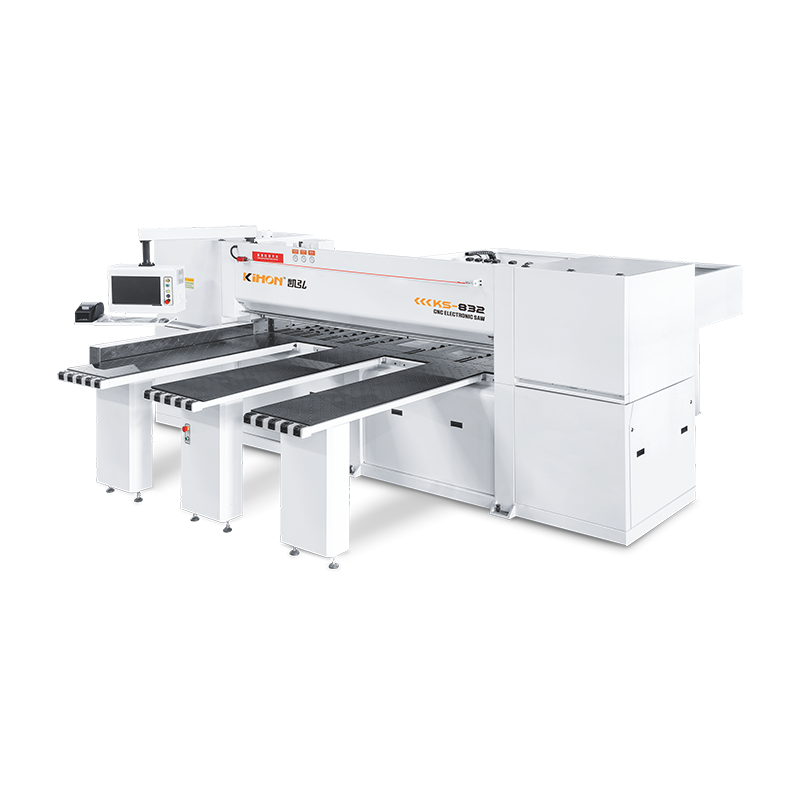
Evaluating Industrial Saw Use: Manual Processing vs. CNC Automation
Comparing legacy systems against CNC capabilities requires standardizing production metrics. Facilities must measure current inefficiencies to understand the true impact of automated sizing technology. The transition from manual table saws or vertical panel saws to fully automated horizontal beam saws represents a significant shift in operational methodology. By analyzing throughput, material yield, and labor allocation, production managers can build a solid business case for equipment upgrades.
Throughput and Cycle Time Analysis
Transitioning from single-sheet manual feeding to automated book-cutting transforms facility output. Stacking multiple sheets allows the machine to process entire batches in a single pass. Automated positioning, pneumatic pusher systems, and optimized multi-step cutting sequences save significant time per shift. Eliminating manual measurement delays streamlines continuous workflows. Operators simply load the material and initiate the program, allowing the machine to handle the complex sizing logic.
In a typical manual operation, the operator spends a significant portion of their time measuring, marking, and aligning the material before making a single cut. This process is repeated for every individual piece. Automated systems eliminate these non-value-added tasks. The machine's pusher fence, equipped with precision encoders, automatically positions the material to the exact required dimension in seconds. This rapid positioning, combined with the ability to cut stacks of material up to 120mm thick, exponentially increases the volume of parts produced per hour.
Measure current cycle times for manual cutting operations.
Calculate the time spent on material handling and positioning.
Compare these metrics against the projected cycle times of an automated system.
Factor in the time saved by eliminating manual measurement errors and rework.
Material Yield and Scrap Reduction
Material costs dominate industrial packaging budgets. Integrating CAD/CAM software with nesting algorithms eliminates human error in cut-pattern planning. The software calculates the most efficient way to extract required parts from raw sheets. Tracking the financial impact of improved yield reveals substantial savings on raw material procurement. Less scrap translates directly to improved margins on every packaging order fulfilled.
Manual cut planning often relies on the operator's experience and intuition, which rarely results in optimal material utilization. Optimization software, on the other hand, uses complex algorithms to analyze the required part dimensions and fit them onto the raw sheet with minimal waste. The software can also prioritize specific cutting sequences to minimize the number of times the material needs to be rotated or repositioned. This level of optimization routinely reduces scrap rates by 15-30%, providing a rapid return on investment for high-volume operations.
Labor Allocation and Operator Safety
Modernizing industrial saw use reduces reliance on highly skilled manual sawyers. Operators no longer need years of experience to achieve perfect cuts. The machine handles the precision, allowing management to reallocate skilled labor to complex assembly tasks. Furthermore, automated systems mitigate workplace injuries. Enclosed cutting zones, safety light curtains, and automated material handling keep operators safely away from the active cutting area.
The physical demands of manually maneuvering large, heavy sheets of plywood or MDF lead to operator fatigue and an increased risk of musculoskeletal injuries. Automated material handling systems, such as vacuum lifters and lifting tables, eliminate the need for manual lifting. The operator's role shifts from physical labor to machine supervision and quality control. This improves workplace safety and allows facilities to maintain consistent production levels throughout the entire shift, regardless of operator fatigue.
Technical Specifications and Evaluation Criteria for Packaging Facilities
Matching machine specifications to specific production criteria determines the success of the installation. Facility managers must evaluate technical capabilities against their heaviest daily workloads. Selecting an underpowered machine leads to frequent breakdowns and poor cut quality, while over-specifying the equipment results in unnecessary capital expenditure. A thorough evaluation of cutting depth, material handling mechanisms, and software integration capabilities is essential for making an informed purchasing decision.
Cutting Depth and Motor Capacity
Sizing the main saw motor depends entirely on maximum stack height and material density. Processing thick stacks of heavy hardwood pallets requires significantly more horsepower than sizing single sheets of foam. Insufficient motor capacity leads to blade stalling and poor cut quality. Evaluating scoring saw requirements is equally critical. A scoring blade prevents tear-out on laminated or coated packaging materials, ensuring a clean edge on both the top and bottom of the panel.
When evaluating motor capacity, it is important to consider the continuous duty rating rather than just the peak horsepower. A machine designed for continuous, three-shift operation requires a robust motor and drive system capable of dissipating heat effectively. The cutting depth, or blade projection, determines the maximum thickness of the material stack that can be processed in a single pass. Facilities processing high volumes of thin materials, such as corrugated board, may prioritize a machine with a lower cutting depth but faster carriage speeds, while those processing thick hardwood pallets require maximum cutting depth and motor torque.
Application
Recommended Motor Power
Required Cutting Depth
Single-Sheet Foam/Plastics
5 - 7.5 HP
60mm
Multi-Wall Corrugated Stacks
10 - 15 HP
90mm
Hardwood Pallet Components
20 - 25 HP
120mm+
Material Handling and Feeding Mechanisms
Loading configurations dictate workflow efficiency. Front-loading machines suit lower volumes, while rear-loading configurations with lifting tables support continuous, high-volume production. Evaluating pneumatic grippers and alignment rollers ensures the machine can handle heavy or awkward sheet materials without slipping. Space-constrained facilities requiring customized sizing of oversized protective panels should assess vertical panel saw configurations. Vertical machines offer substantial cutting capacity while requiring a fraction of the floor space.
The choice between front-loading and rear-loading configurations significantly impacts the overall footprint and material flow of the facility. Front-loading machines require the operator to manually load each sheet or stack onto the front table, which can be a bottleneck in high-volume operations. Rear-loading machines, equipped with automated lifting tables, allow entire bunks of material to be loaded via forklift. The machine then automatically feeds the required number of sheets into the cutting zone, drastically reducing material handling time and operator fatigue.
Assess the average daily volume of material processed.
Determine the maximum weight and dimensions of the raw material sheets.
Evaluate the available floor space for material staging and loading.
Select a loading configuration that aligns with the facility's workflow and volume requirements.
Software and ERP Integration
Connecting the machine's control interface with facility-wide ERP or MRP systems centralizes production data. This integration streamlines packaging production by sending cut lists directly from the design office to the shop floor. Real-time tracking of job progress allows managers to monitor output accurately. The system also tracks material consumption and generates predictive maintenance alerts, preventing unexpected downtime.
Modern control software offers features beyond simple cut optimization. Advanced systems can generate barcode labels for each cut part, facilitating tracking and assembly downstream. The software can also integrate with inventory management systems, automatically deducting raw materials from stock as they are processed. This level of integration eliminates manual data entry, reduces administrative overhead, and provides management with real-time visibility into production metrics and material costs.
Implementation Risks, Facility Constraints, and Mitigation
Balancing machine capabilities with real-world facility limitations ensures a smooth installation. Overlooking physical or operational constraints leads to delayed deployment and cost overruns. A successful implementation requires careful planning, from assessing floor space and power requirements to establishing comprehensive training programs for operators and maintenance personnel.
Footprint and Layout Requirements
Horizontal beam saws demand significant floor space for both the machine and the surrounding material handling zones. Vertical panel saws provide an alternative for tight layouts. Designing workflow layouts requires planning for raw material staging areas and offloading zones for finished packaging components. Forklift access must remain unobstructed to maintain a steady supply of raw panels to the loading table.
When planning the layout, it is crucial to consider the flow of materials through the facility. The raw material staging area should be located close to the machine's loading zone to minimize forklift travel time. Similarly, the offloading area should provide ample space for sorting and stacking finished components before they are transferred to the assembly line. Adequate clearance must also be provided around the machine for maintenance access and safe operator movement.
Maintenance, Tooling Costs, and Downtime
Processing abrasive packaging materials accelerates blade wear. Facilities must budget for specialized carbide or diamond-tipped blades to maintain cut quality. Establishing strict preventative maintenance schedules prevents catastrophic failures. Maintenance teams must regularly inspect linear guides, lubricate pneumatic systems, and clear dust extraction ports. Efficient dust collection prevents debris from fouling precision sensors and drive mechanisms.
The cost of tooling and maintenance should be factored into the overall operating budget. Diamond-tipped blades, while more expensive initially, offer significantly longer lifespans when processing abrasive materials like MDF or composite panels. A robust preventative maintenance program is essential for maximizing machine uptime. This includes daily cleaning of sensors and linear guides, weekly lubrication of moving parts, and regular inspection of pneumatic and electrical systems.
Develop a daily cleaning checklist for operators.
Establish a weekly lubrication schedule for maintenance personnel.
Monitor blade wear and replace tooling before cut quality degrades.
Ensure the dust extraction system is properly sized and maintained.
Operator Training and Adoption Curves
Transitioning staff from manual operation to software-driven machine management requires structured training. Operators must learn to navigate the control interface, manage error codes, and perform basic troubleshooting. Facilities should anticipate and mitigate initial productivity dips during the software integration and training phases. Partnering with vendors who provide comprehensive on-site training accelerates the adoption curve and restores peak production faster.
Effective training goes beyond simply showing the operator which buttons to push. It involves educating them on the machine's underlying logic, how to interpret optimization reports, and how to identify and resolve common errors. Cross-training multiple operators ensures that production is not disrupted if the primary operator is absent. Investing in comprehensive training upfront minimizes the risk of operator error, reduces machine downtime, and maximizes the return on investment.
Conclusion
Automated sizing transitions packaging production from a labor-intensive bottleneck to a predictable, high-yield manufacturing process. Success relies entirely on matching the equipment to the specific material mix and volume requirements of the facility. Facilities processing high volumes of standardized pallets or corrugated stacks should prioritize rear-loading horizontal beam saws. Custom or space-constrained operations may find better value in vertical configurations.
Conduct a time-and-yield study on current manual processes to establish baseline metrics.
Request a cut-study from shortlisted vendors using your specific packaging materials to verify cut quality and cycle times.
Calculate the projected ROI based on scrap reduction and labor reallocation to justify the capital expenditure.
Evaluate facility layout and power availability to ensure seamless installation and workflow integration.
FAQ
Q: What materials can a CNC panel saw process for packaging applications?
A: These machines process a wide variety of substrates including plywood, OSB, MDF, heavy-duty corrugated board, high-density foam, and industrial plastics. Proper blade selection and speed adjustments allow seamless transitions between different packaging materials.
Q: How does a CNC panel saw improve corrugated cutting compared to die-cutting?
A: It eliminates expensive tooling and die costs for low-to-medium volume custom runs. The machine can cleanly stack-cut thick multi-wall boards, providing rapid turnaround times for custom protective inserts without waiting for custom dies to be manufactured.
Q: What is the typical ROI timeline for industrial saw use in packaging production?
A: Facilities typically see a return on investment within 12 to 24 months. This rapid ROI is driven by significantly reduced material waste, lower labor costs per unit produced, and massive increases in overall throughput.
Q: What is the difference between vertical and horizontal CNC panel saws for packaging?
A: Horizontal beam saws offer superior stack-cutting capabilities and automated material handling but require a massive footprint. Vertical saws save significant floor space and are excellent for custom sizing, but generally process fewer sheets simultaneously.
Q: How does automated sheet material cutting reduce packaging waste?
A: Integrated algorithmic optimization software calculates the most efficient cut patterns before the machine makes a single pass. This nesting process maximizes material usage and routinely reduces scrap rates by up to 30 percent.
Q: Can CNC panel saws integrate with existing packaging design software?
A: Yes. Modern control systems are fully compatible with standard CAD/CAM and packaging design software. Data transfers seamlessly via post-processors and networked control systems, eliminating manual data entry on the shop floor.